Florence in December: A Three-Day Travel Journal
Florence, Italy · Dec 12 to 14, 2025
Getting There
We landed in Florence around 2:30 in the afternoon, and things felt easy right away. The airport is small, and just outside there’s the Tram T2. It’s maybe a minute’s walk. We bought tickets, got on, and about half an hour later we were already in the city.
I remember thinking how nice it was not having to figure things out while half tired from flying. For a city that’s been around forever, Florence is surprisingly good at making the first impression calm.
We dropped our luggage at the hotel and went straight back out. No resting. That felt important.
First Food, First Cold Breeze
It was cold, but in a good way. Bright sun, clear sky, a bit windy. The kind of December weather where you’re glad you brought a jacket, but also glad you’re outside. Somewhere between two and fifteen degrees, depending on whether you were standing in the sun or not.
We went straight to All’Antico Vinaio. The sandwich was about ten euros, not cheap, but really good. Right out of the oven bread, generous fillings, everything tasting fresh.
There’s nowhere to sit, so we just stood on the street eating it like everyone else. Slightly awkward, slightly messy, but somehow that made it feel even more right. That was probably the moment it really hit me that we were in Florence.
Sunset Above the City
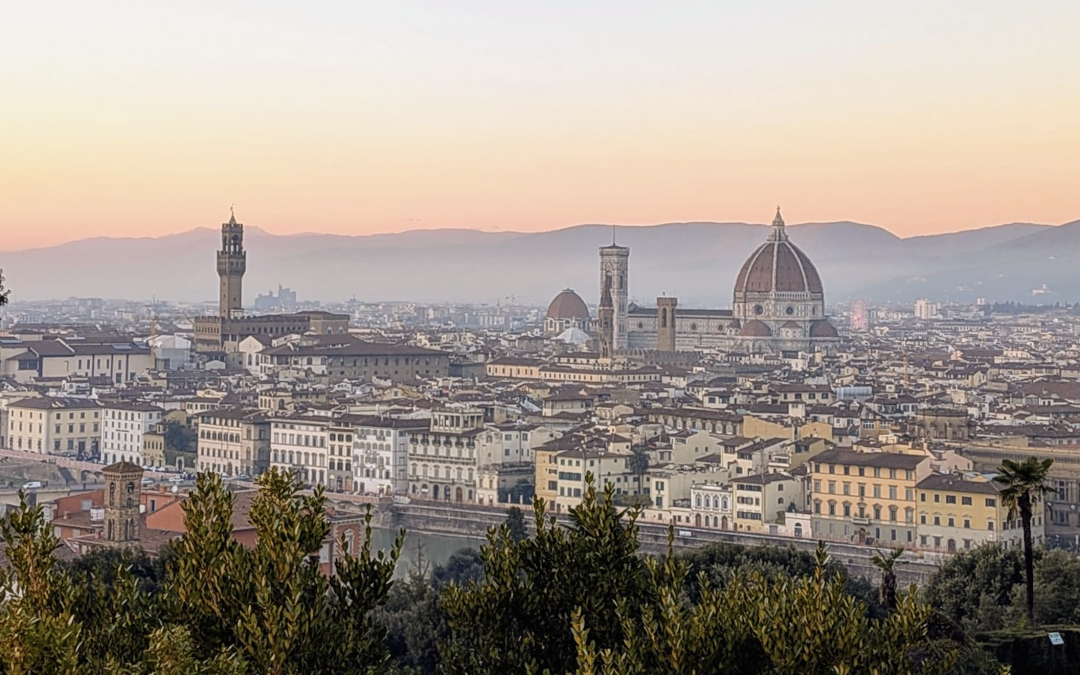
After that, we took a bus up to Piazzale Michelangelo. It was crowded, but once you see the view, you forget about that. Florence just opens up in front of you. The river, the rooftops, the Duomo, all slowly changing color as the sun goes down.
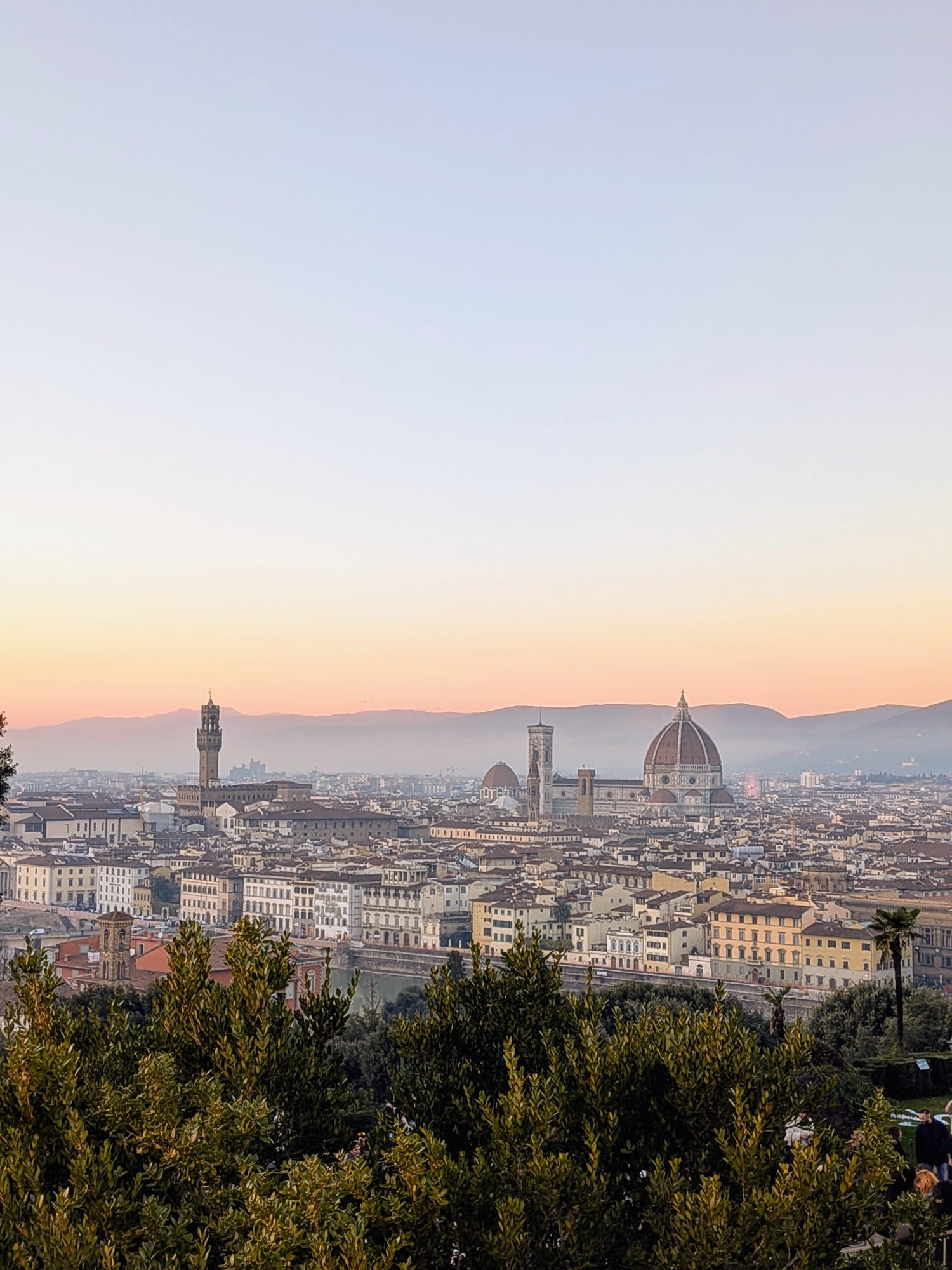
I only found out later that the viewpoint itself isn’t ancient. It was designed in the nineteenth century, when Florence briefly became the capital of Italy. Even the statues are replicas. But standing there in that light, none of that mattered. It felt timeless anyway.
Instead of heading back the same way, we walked down the hill. Mostly because we still had energy, and we wanted to see more of the city while the light was nice.
Gelato, Then the Bridge
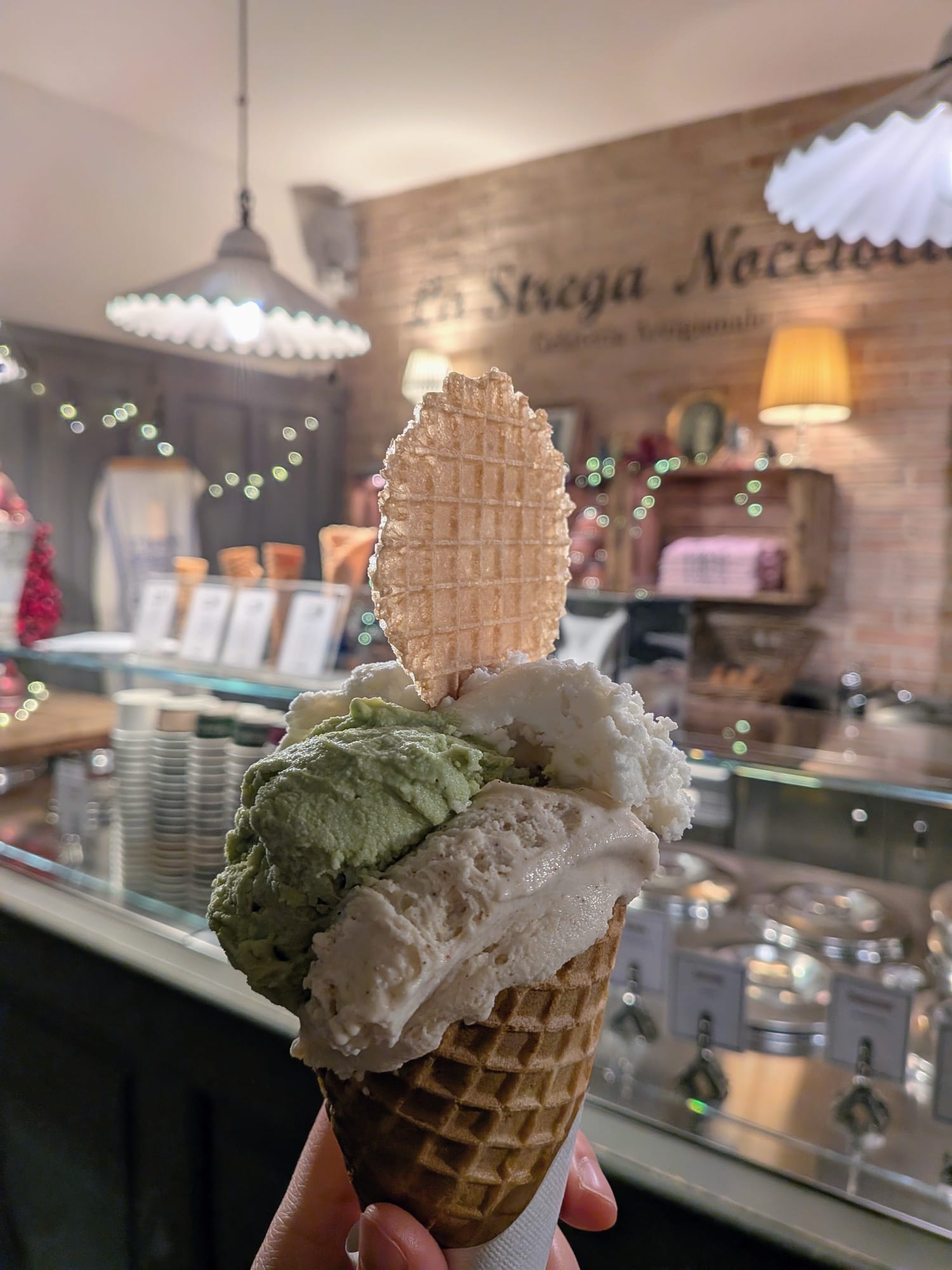
We walked along the river without much of a plan and stopped for gelato at Gelateria Artigianale La Sorbettiera. This turned out to be one of my favorite stops of the whole trip.
The gelato was incredibly smooth. Not too sweet, not heavy. Chestnut tasted warm and nutty, pistachio was deep and earthy. Everything felt clean and intentional, like the flavors didn’t need to compete with each other.
Only after that did we walk over to Ponte Vecchio. The bridge was lively, but not overwhelming. The jewelry shops were glowing, the sky was getting darker, and people were just slowly moving across.
Knowing that it’s the only bridge in Florence that survived World War II makes it feel different when you walk over it. Not dramatic, just quietly heavy in the background.
Dinner and an Early Night
We wandered around for a bit, looked into a few shops, and slowly got tired. Dinner felt inevitable.
We had an eight o’clock reservation at Trattoria Zà Zà, but we went early because we were already hungry. We ordered wild boar spaghetti and beef strips with truffle. The famous Florentine steak wasn’t really an option for us, since we have very different opinions on how beef should be cooked and the portion is too big for one person.
The food was good. The place was busy. But if I’m honest, it wasn’t my favorite meal of the trip. Still, it did its job. We were warm, full, and ready to sleep.
The Duomo and Changing Expectations
The next morning, we started at the Florence Cathedral complex. We skipped climbing anything and focused on the crypt, baptistry, and museum. Our crypt reservation was at 10:30.
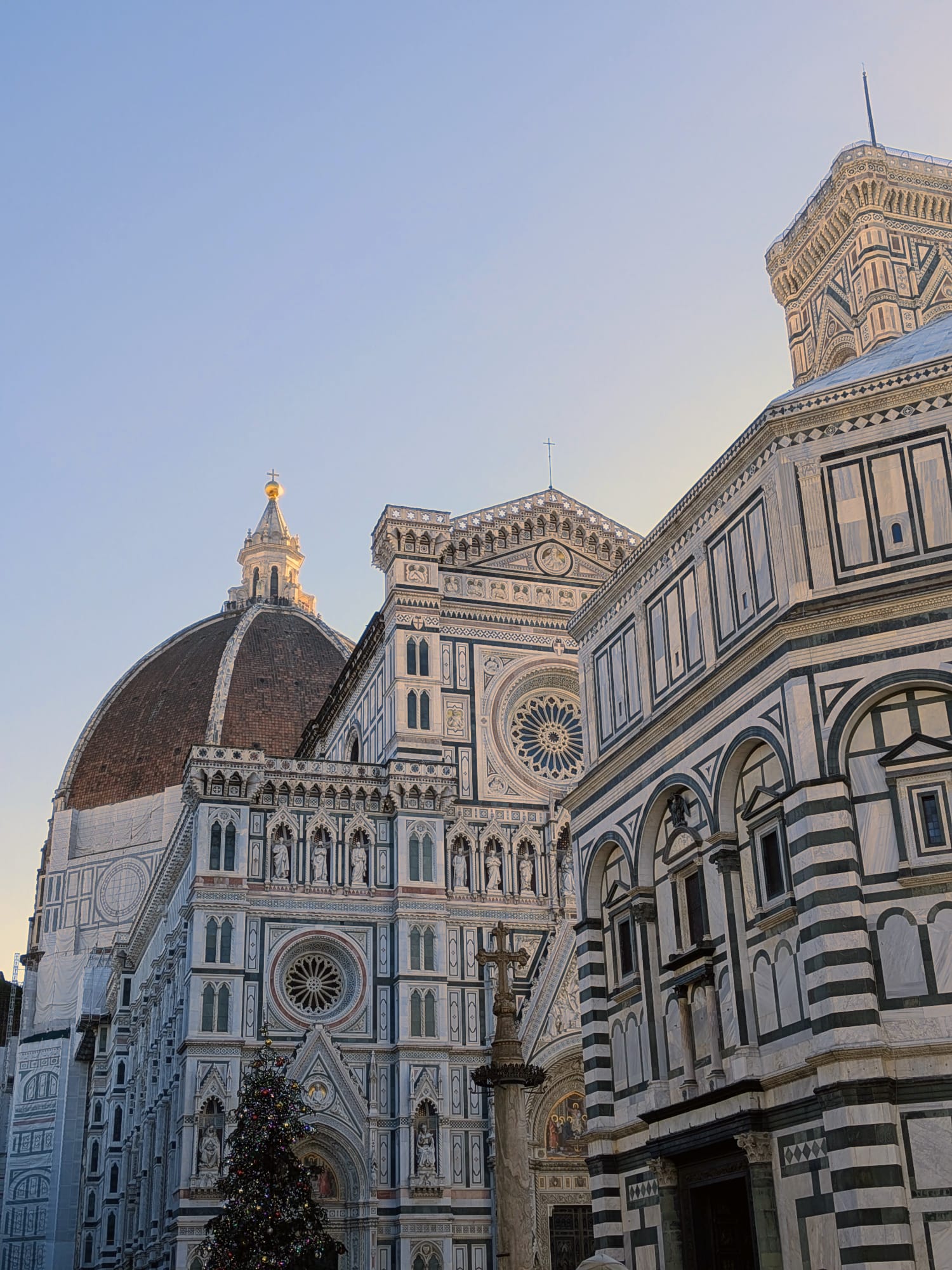
From the outside, the cathedral is dramatic and detailed. Inside, it feels surprisingly simple. Almost empty at first. I remember feeling a bit confused by that.
But the more time we spent there, the more it made sense. Florence was shaped by Renaissance ideas that valued proportion, balance, and clarity. The space isn’t meant to overwhelm you with decoration. It’s meant to make you feel small, quiet, and reflective. Other churches go all in on gold and ornamentation. Florence Cathedral didn’t need to.
The Baptistry
The baptistry was completely different. Smaller, darker, and instantly more intense.
The ceiling mosaics are covered in gold and deep colors, telling stories of heaven, hell, judgment, and salvation. They were made for people who couldn’t read, so everything had to be shown, not explained. Standing there, you naturally keep looking up, following one scene to the next.
Even with parts under restoration, it was stunning. The contrast between the calm, restrained cathedral and the richness of the baptistry made both feel stronger.
Leather, Finally
Florence’s leather reputation runs deeper than shopping streets. The Florence Leather School, near Santa Croce, teaches traditional leather craftsmanship and reminds you that this is a real skill here, not just something made for tourists.
I really wanted to buy a leather bag in Florence, so I had a few shops in mind. One was Vale Leather Goods, which sells branded pieces and is priced a bit higher but still reasonable.
The shop that really clicked for me was Roberta Firenze. The Japanese saleslady was incredibly kind and patient. I bought a small black handbag, a little scarf for it, and a leather passport case. Nothing flashy. Just things I know I’ll actually use.
Lunch That Was Worth the Effort
Lunch was at Trattoria Sergio Gozzi. They only open from noon to three and don’t take reservations, so we arrived at 11:55.
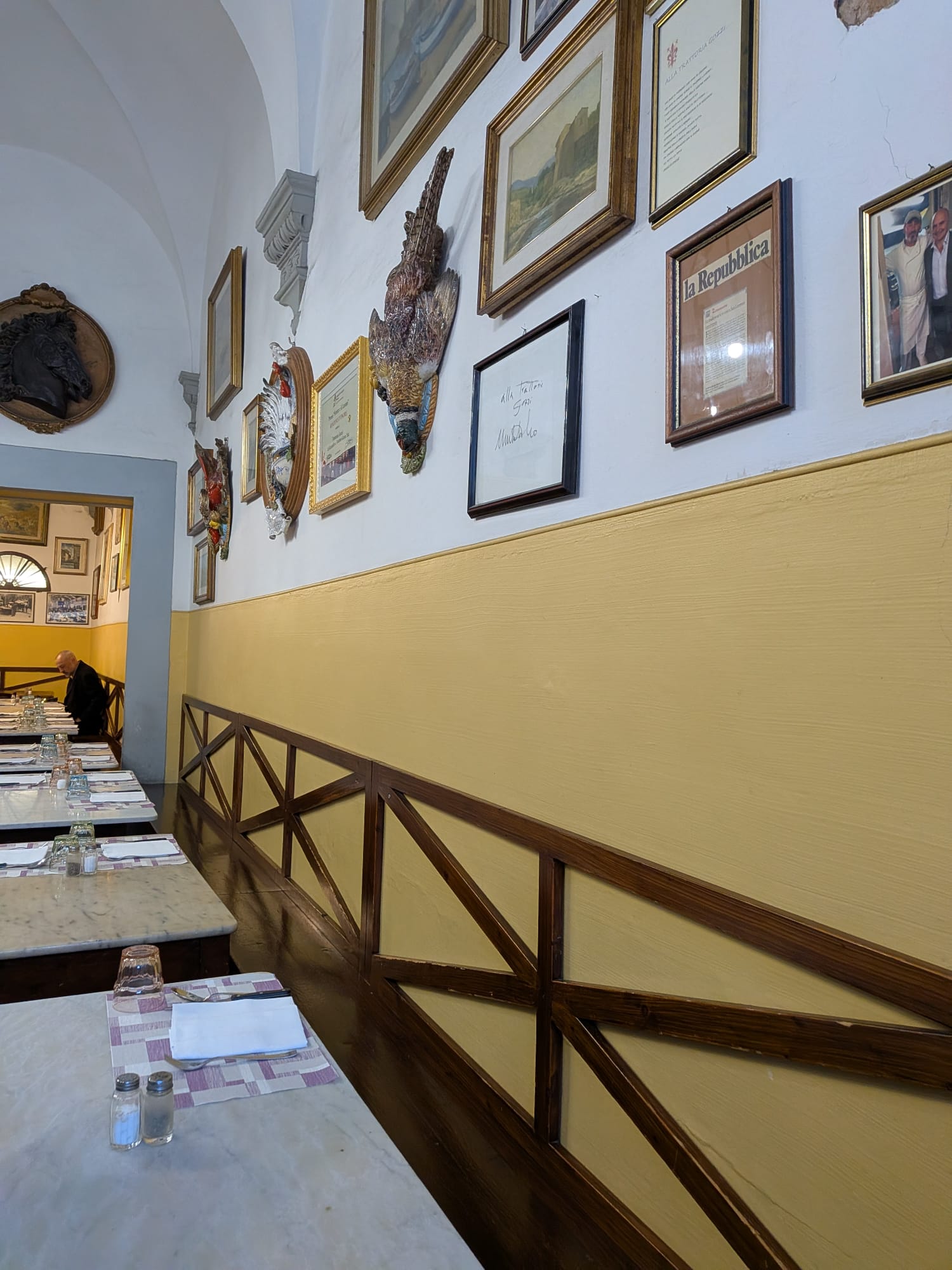
It was worth it.
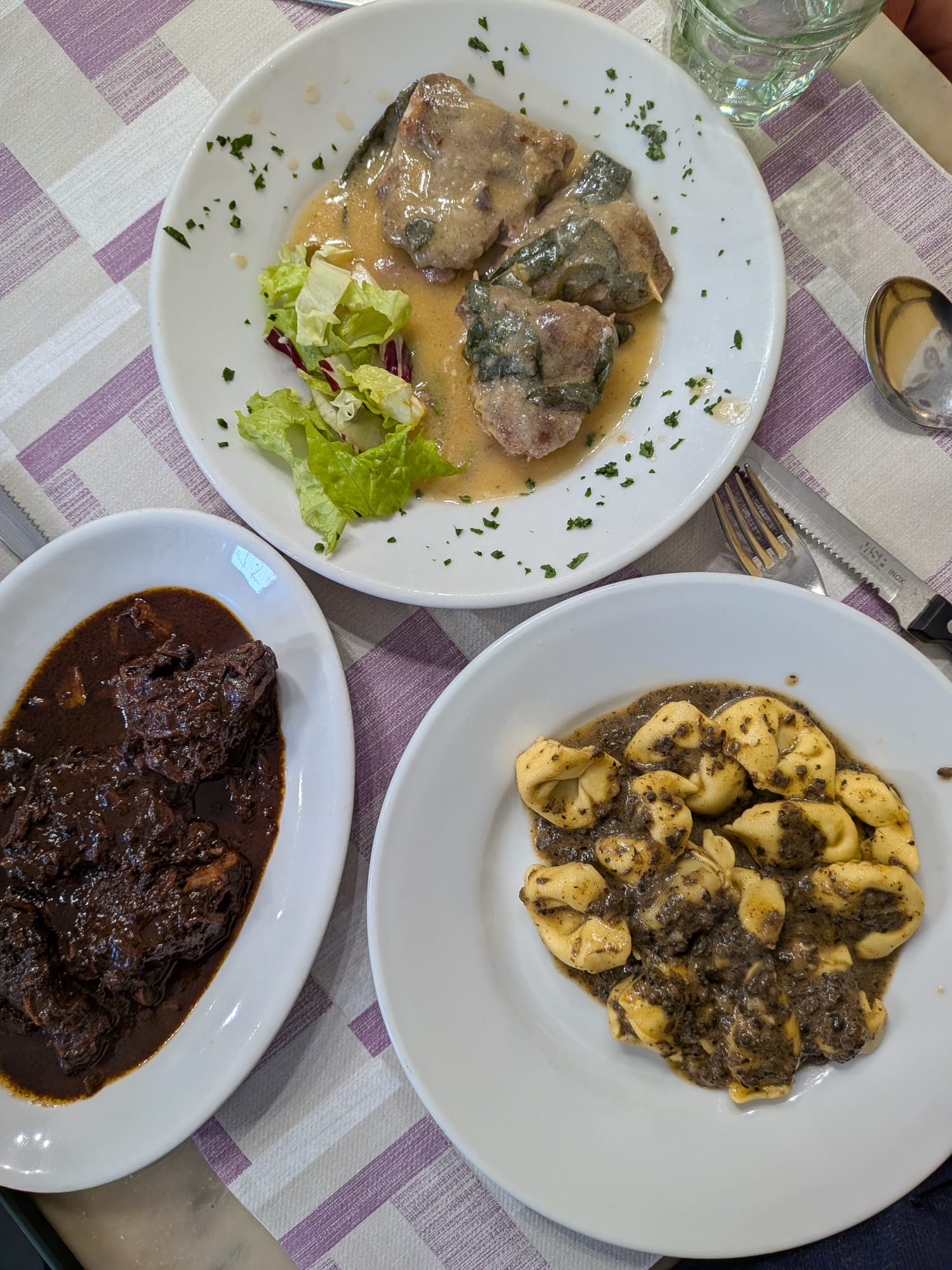
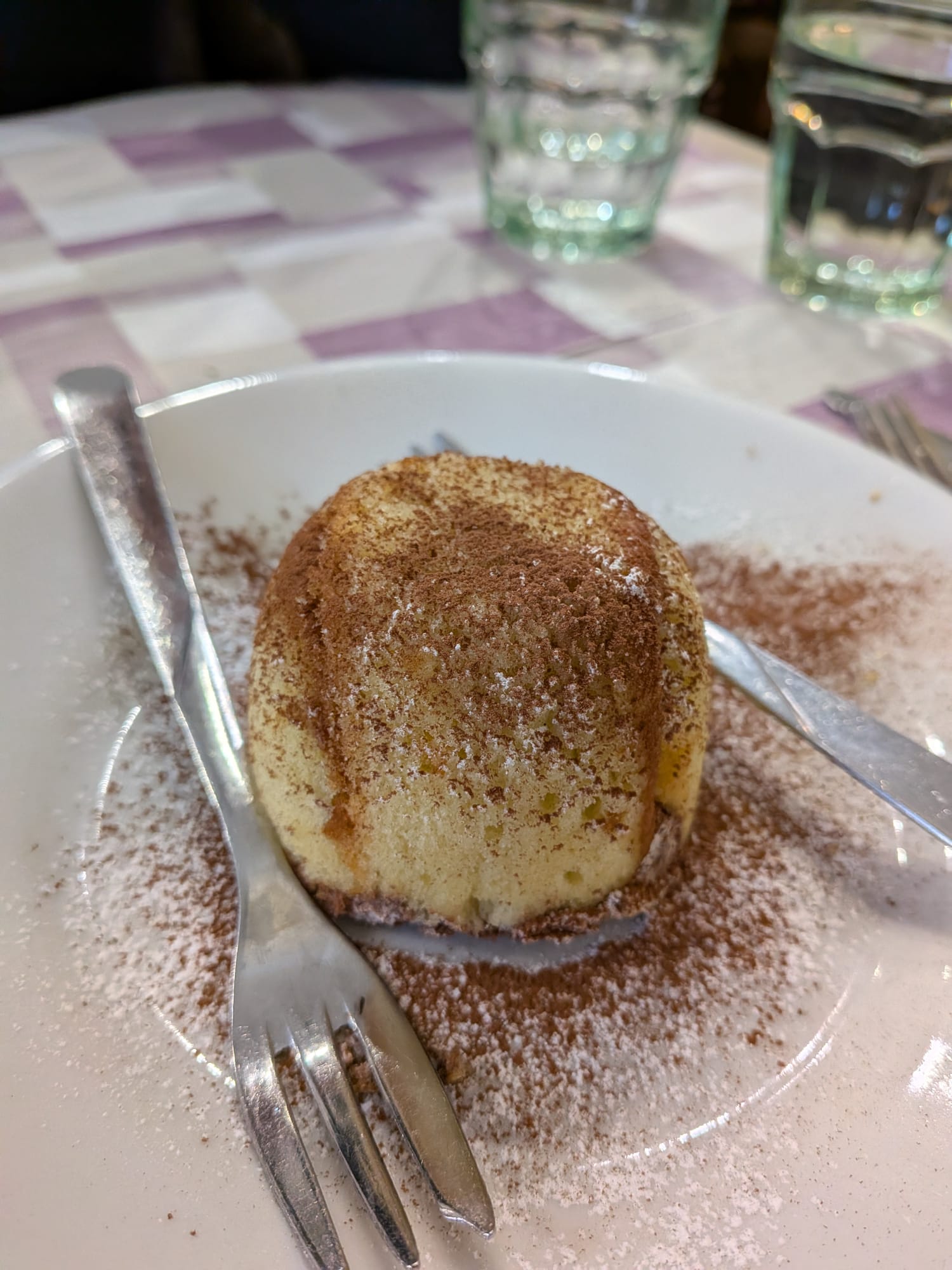
We had peposo, tortellacci with truffle cream and mushrooms, ham and cheese beef rolls, and Zuccotto Fiorentino for dessert. Everything was excellent, especially the peposo, the beef stew in pepper wine sauce. The dessert surprised me more than I expected. Rich, comforting, and not overly sweet.
The Walking Tour We Were Waiting For
We quickly visited the Catheral musem after lunch, it was impressive. At 3:30, we joined the walking tour we had booked well in advance and were genuinely looking forward to.
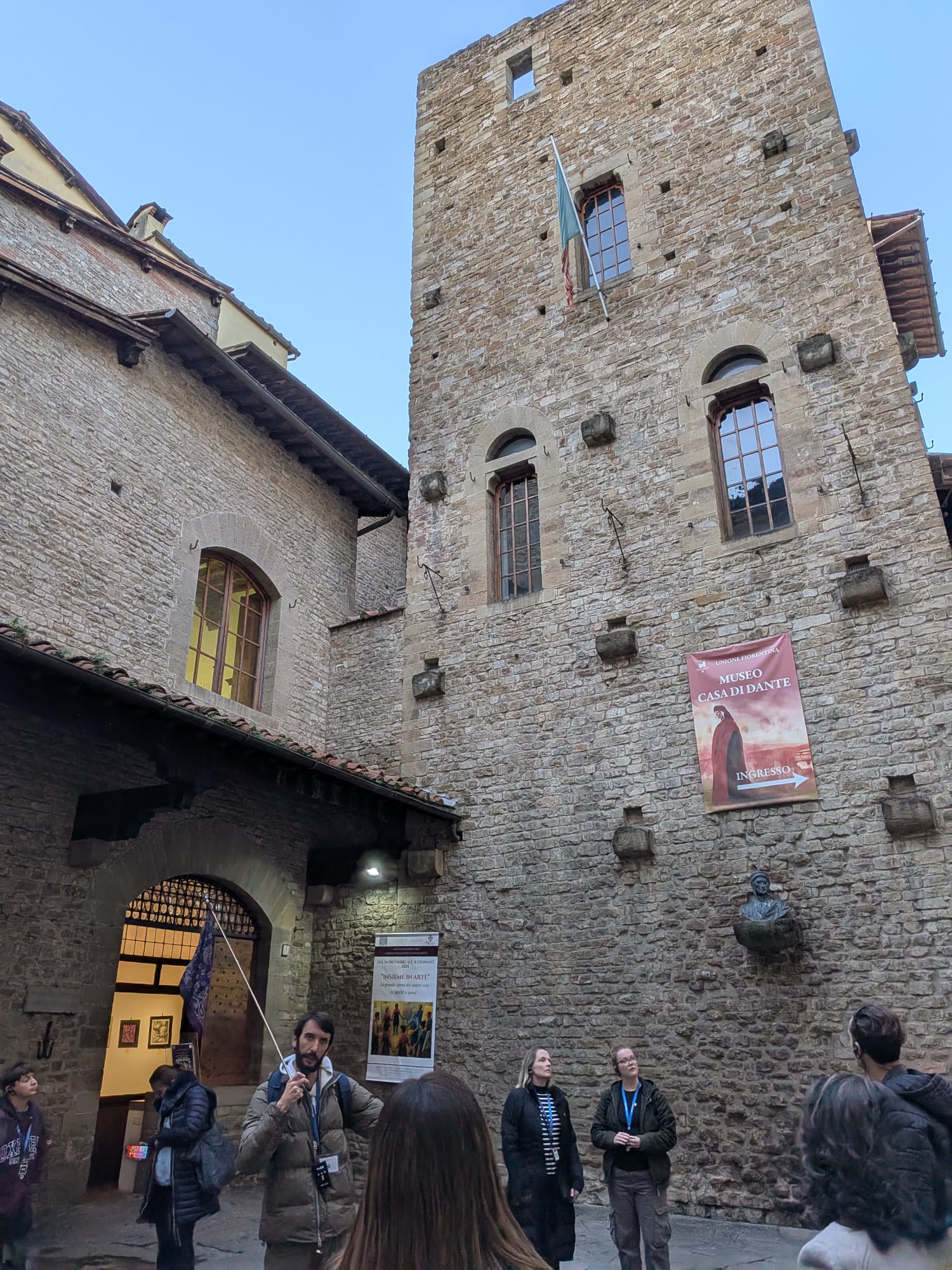
The guide talked a lot about the Medici family, and suddenly Florence felt more readable. The Medici weren’t kings by birth. They were bankers who understood how power worked. Art and architecture weren’t just beautiful, they were tools. Funding artists was a way to shape the city, and also how the city saw them.
One thing the guide pointed out is that Florence has long had strict rules about building height. Private buildings weren’t meant to rise above a certain level, partly for safety, but also to prevent individual families from dominating the skyline. The Medici worked around this by layering materials, rough stone at the bottom, smoother and more refined stone above, so their buildings looked taller and more powerful without technically breaking the rules. Other families eventually copied this.
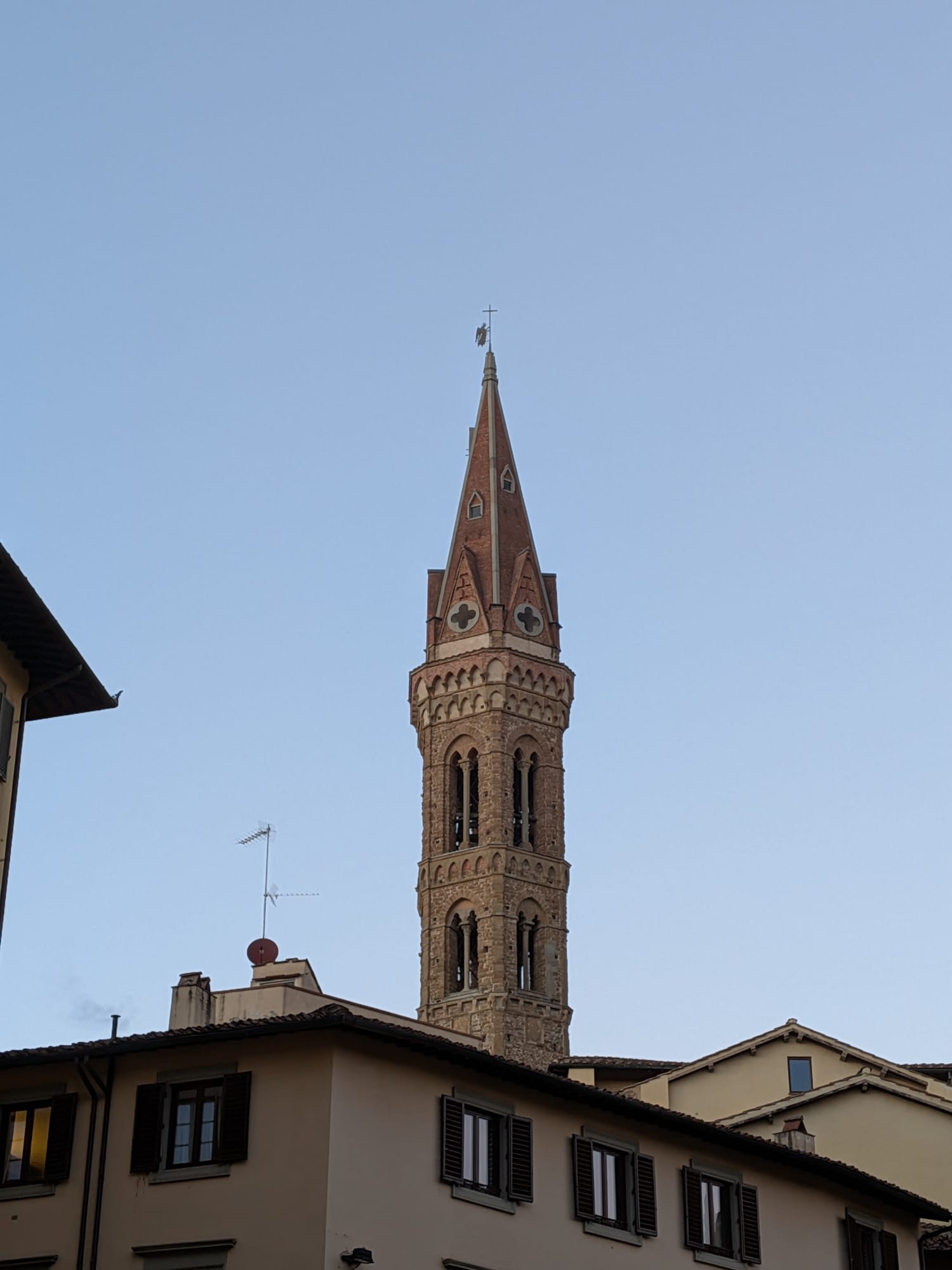
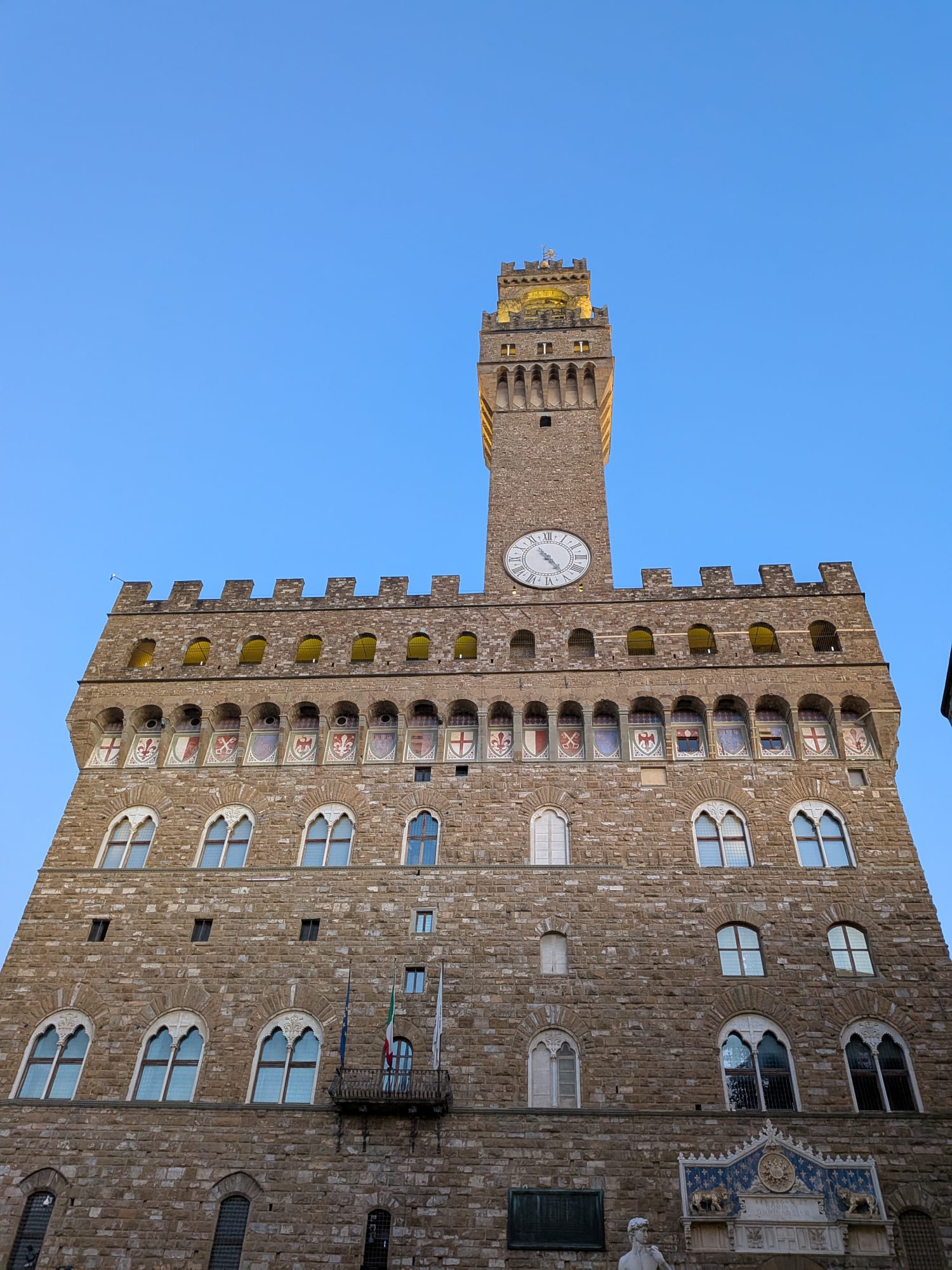
Civic buildings were a different story. Towers like Palazzo Vecchio were deliberately built taller than everything around them. The message was clear. No matter how wealthy a family became, the authority of the city stood above all.
Wine Windows, Then Bischero
During the same walk, the guide pointed out small windows set low into the walls of old buildings. Wine windows.
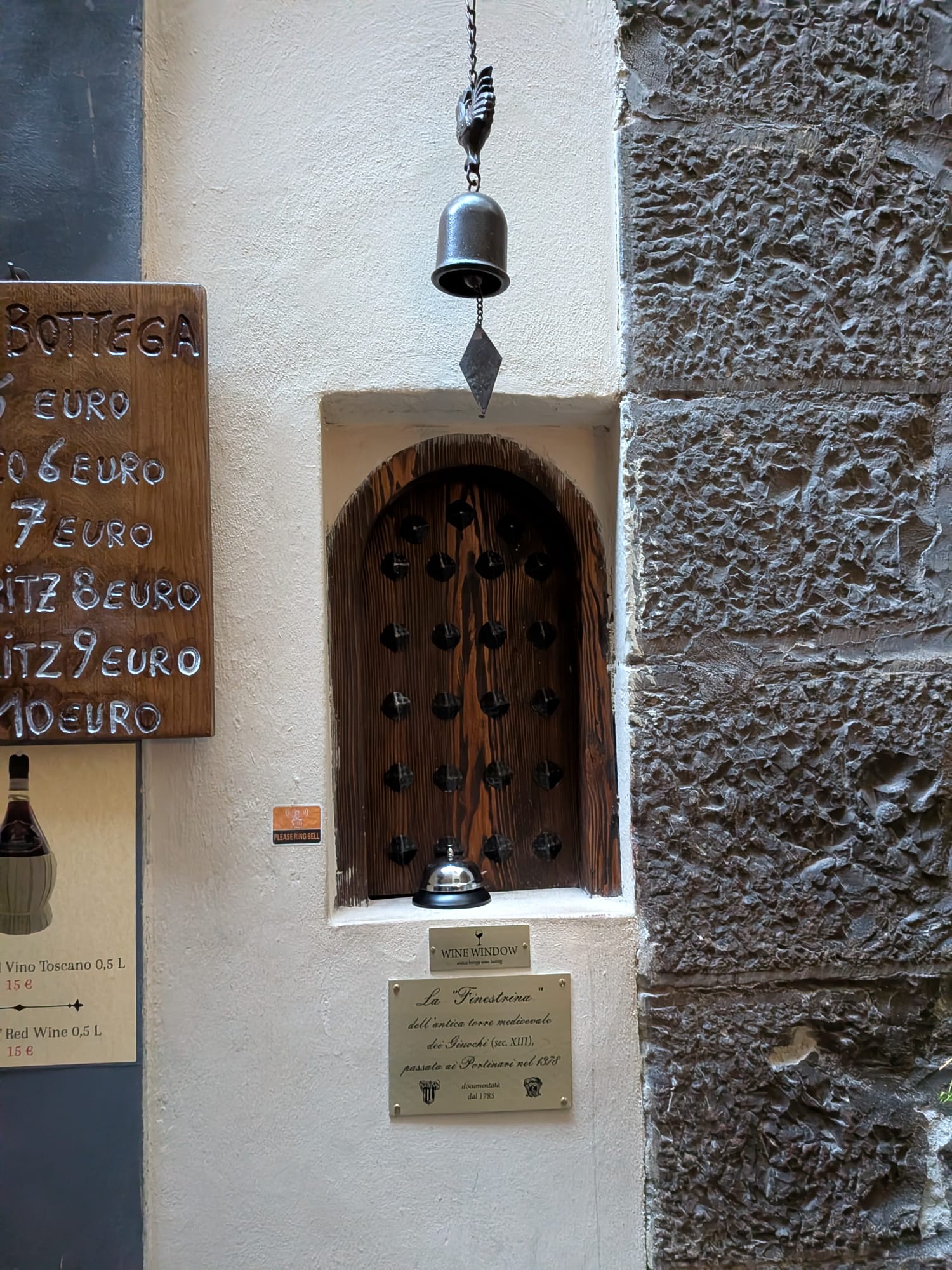
Back in the sixteenth and seventeenth centuries, Florentine families who owned vineyards were allowed to sell wine directly from their homes. You would knock, pass over a flask, and get it filled through the window. During times of plague, they became especially useful since you could buy wine without close contact. Some of these windows are still in use today, which makes them feel less like history and more like something quietly ongoing.
As we were walking and listening, a nun suddenly stopped and sang a few lines. Her voice echoed through the street, and everyone went quiet. It wasn’t planned, and it didn’t feel like a performance. Just a moment.
Only later, when she joked with our guide and called him a “bischero,” did the story come up.
The Bischeri family once owned land where the city wanted to expand the cathedral square. They refused to sell, hoping the price would rise. Florence simply built around them instead. Their house ended up isolated and devalued, and their name became shorthand for stubborn foolishness.
So when someone says, “Non sono un bischero,” they mean they’re not stupid enough to make that mistake.
Gloves, Pasta, and One of the Best Meals
After the tour, we went to Madova. It’s been around since 1919. I have small hands, and finding gloves that fit is always difficult, but here I found the perfect pair with cashmere lining.
Dinner was at Osteria Toscanella, in the Oltrarno area. The building dates back to the fourteenth century. The waiter told us that Mona Lisa once lived around this neighborhood, and that there’s a well right next to the restaurant. Local stories say she may have drawn water from it herself. Whether that’s fully true or not, it made sitting there feel strangely personal.
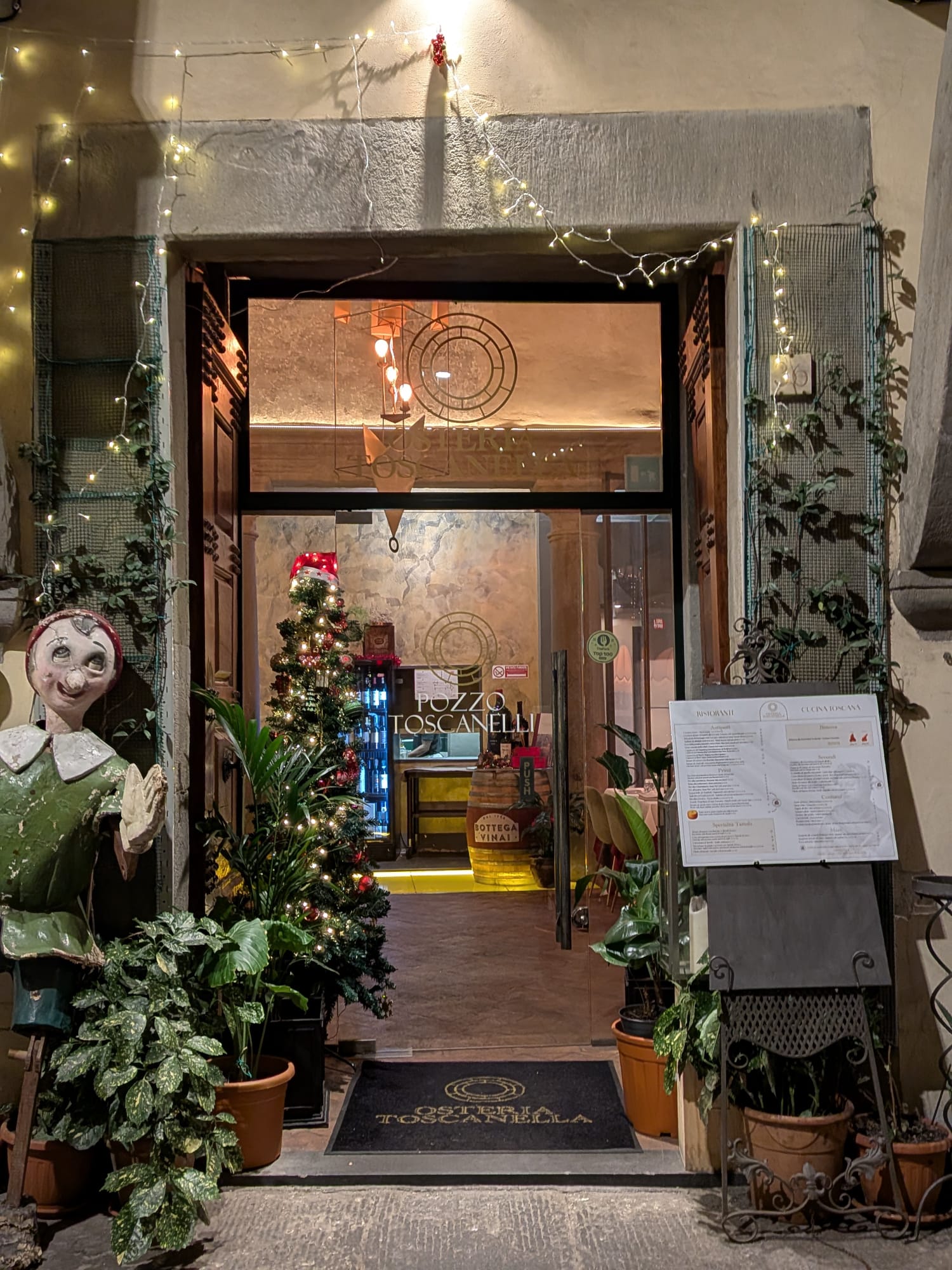
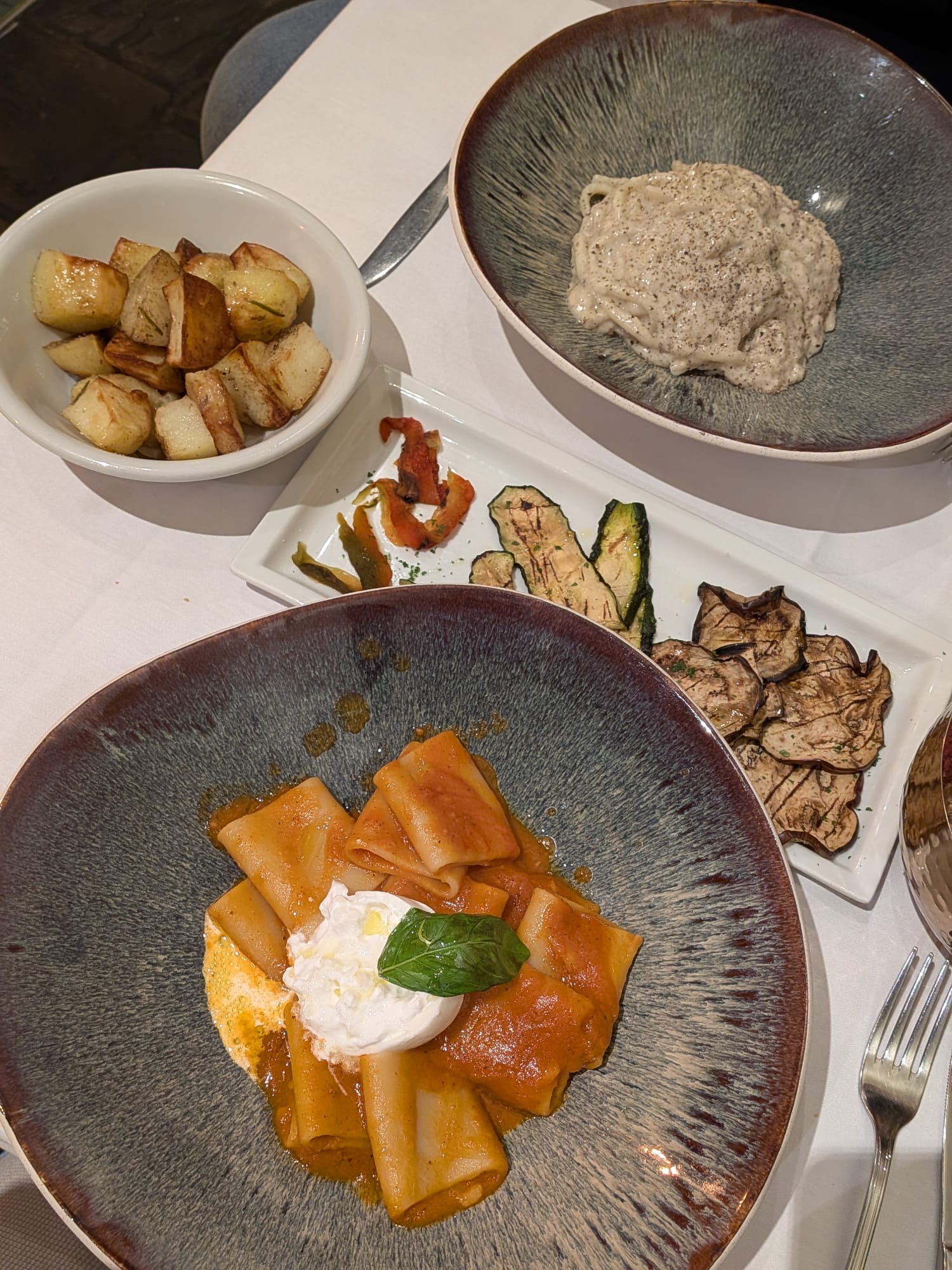
We ordered paccheri with tomato and burrata, and cacio e pepe prepared in a cheese wheel. Both were incredible. Dessert was cheesecake and tiramisu, and by the end, we were very happy.
Christmas Market
We ended the night at the Christmas market near Santa Croce. It was lively and cozy, with lots of food, drinks, and places to sit.
We only had chestnuts and hot drinks since we were still full, but the chestnuts were some of the best we’ve had all year. Much better than the ones back in Germany.
Last Morning
Our flight was around three in the afternoon, so the last morning was relaxed. We debated visiting Galleria dell’Accademia, but decided not to rush it. Instead, we visited a couple of churches. It’s always incredible to see what people managed to build centuries ago.
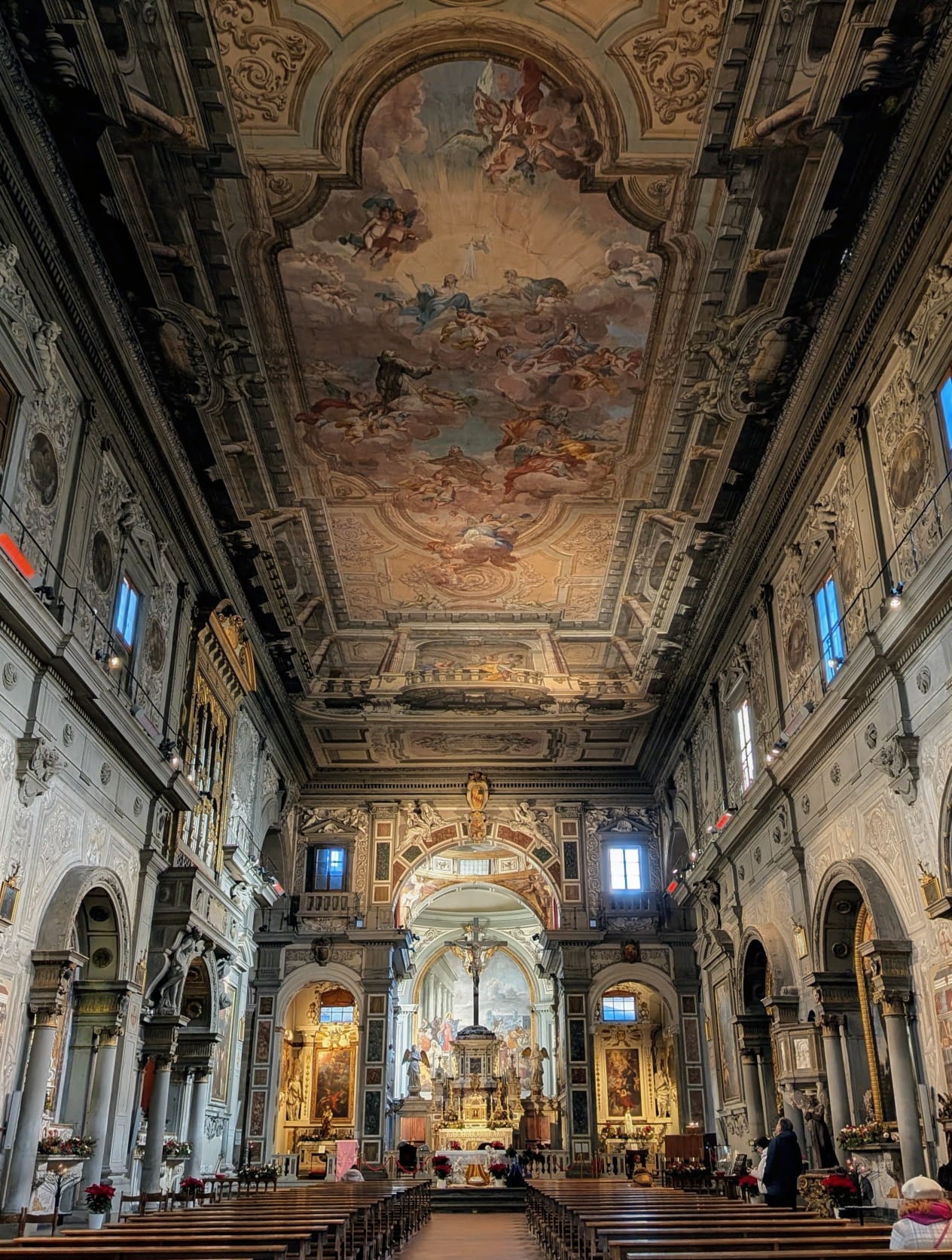
The first was Santissima Annunziata, a deeply important Marian church for Florence. Calm, balanced, and still very much part of daily life.
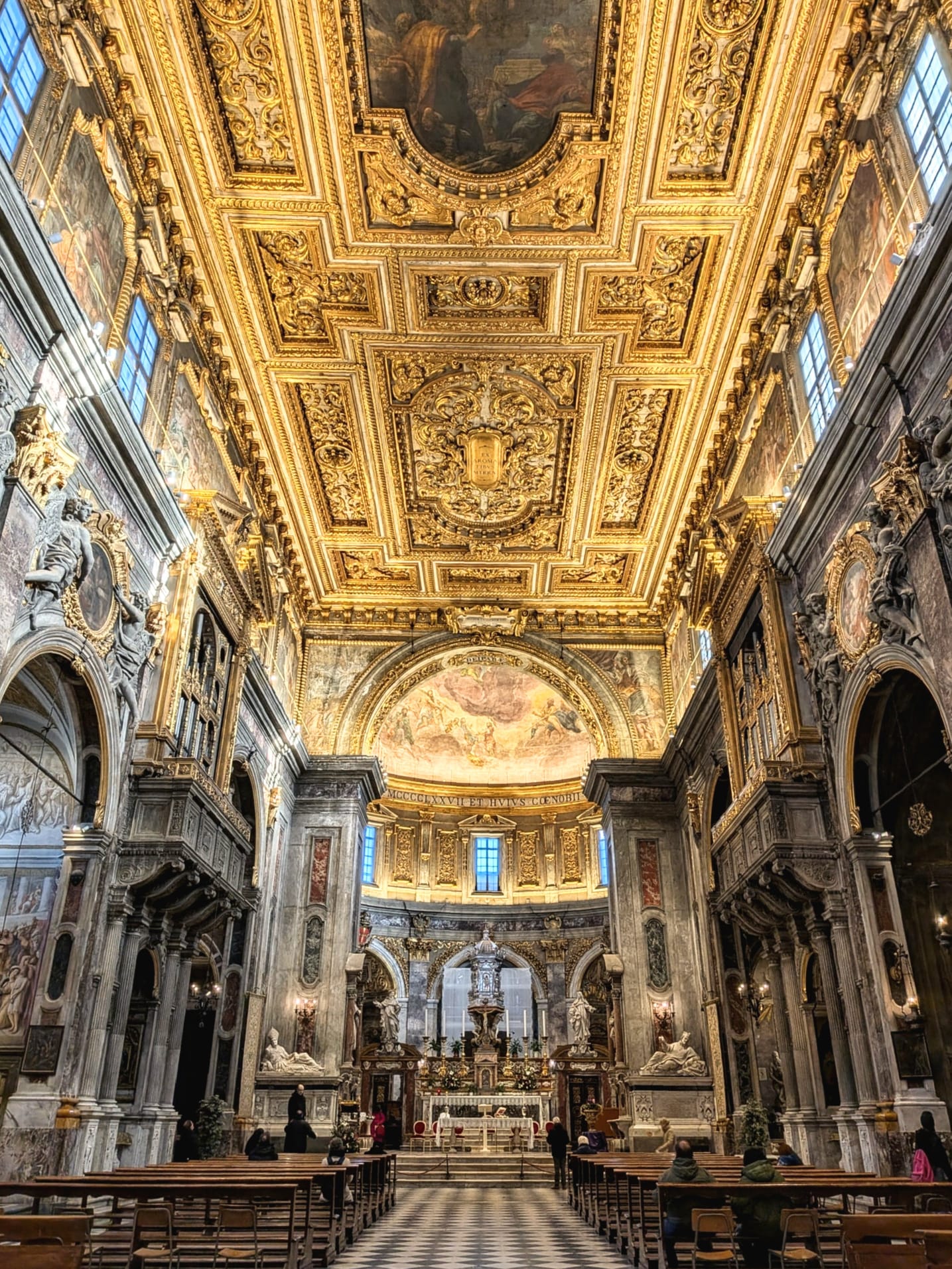
The second was Chiesa di San Salvatore in Ognissanti. It’s tied to Florence’s merchant families and the Vespucci family, and to the world Mona Lisa lived in. Elegant, grounded, and quietly impressive.
One Last Meal and Home
Before heading to the airport, we stopped at Mercato Centrale. It’s very well organized and definitely a bit touristy, but the food is genuinely good.
We kept it simple with truffle pasta and carbonara, and a small treat of tiramisu. All were exactly what we wanted before traveling.
We picked up our luggage, took the tram back to the airport, and headed home. The airport was crowded, and there was a slightly awkward moment with the staff at the check in counter, but nothing worth holding onto.
Looking Back
It was a short trip, but it felt full. We didn’t try to see everything, and I’m glad we didn’t. Florence feels like a city that asks you to slow down.
There’s plenty left for next time. The Uffizi, the Accademia, maybe a road trip through Tuscany, or a stop in Siena. But for now, this trip ended exactly how it should have.
Tired legs, full stomachs, and memories I really don’t want to forget.